Later this year, Australians will vote in a referendum about whether to enshrine an Indigenous Voice to Parliament in the constitution.
The Voice is a proposed independent and permanent advisory body that would advise policymakers on matters affecting the lives of Aboriginal and Torres Strait Islander peoples.
The scope of issues on which the Voice would provide advice has been a source of conflict in recent debates.
In the lead-up to the vote, here are all your questions answered.
What is the proposed Voice to Parliament?
The is a proposed advisory body, which would provide policymakers with input on matters relating to Aboriginal and Torres Strait Islander peoples.
While the Voice won’t be able to veto proposed bills or policies, it will be able to shape them from the start, advocates say.
The Voice would be allocated enough funding to allow it “to research, develop and make representations” to both the parliament and government, according to the Voice’s .
Under the current proposal, there would be no legal requirement for the government to follow the Voice’s advice.
The form the Voice could eventually take remains in the hands of parliament and would be determined after a successful Yes vote.
According to the Yes side’s proposed constitutional amendment, the parliament would retain the power over the “composition, functions, powers and procedures” of the Voice.
However, members of the Voice “will be chosen by Aboriginal and Torres Strait Islander people based on the wishes of local communities”, the Voice website says, adding that members “would serve on the Voice for a fixed period of time, to ensure regular accountability to their communities”.
It also says the Voice’s Aboriginal and/or Torres Strait Islander members would be chosen from each of the states, territories and the Torres Strait Islands.
The scope of issues on which the Voice would provide advice has been a regular source of conflict in recent debates.
Members of the No camp have frequently suggested that its remit would essentially be boundless and would include defence and monetary policy.
Yes campaigners have stressed that the Voice , such as poverty, incarceration, child removal, and poor health and educational outcomes.
Others in the ‘progressive no’ camp have suggested that , and instead have called for seats in parliament and a treaty.
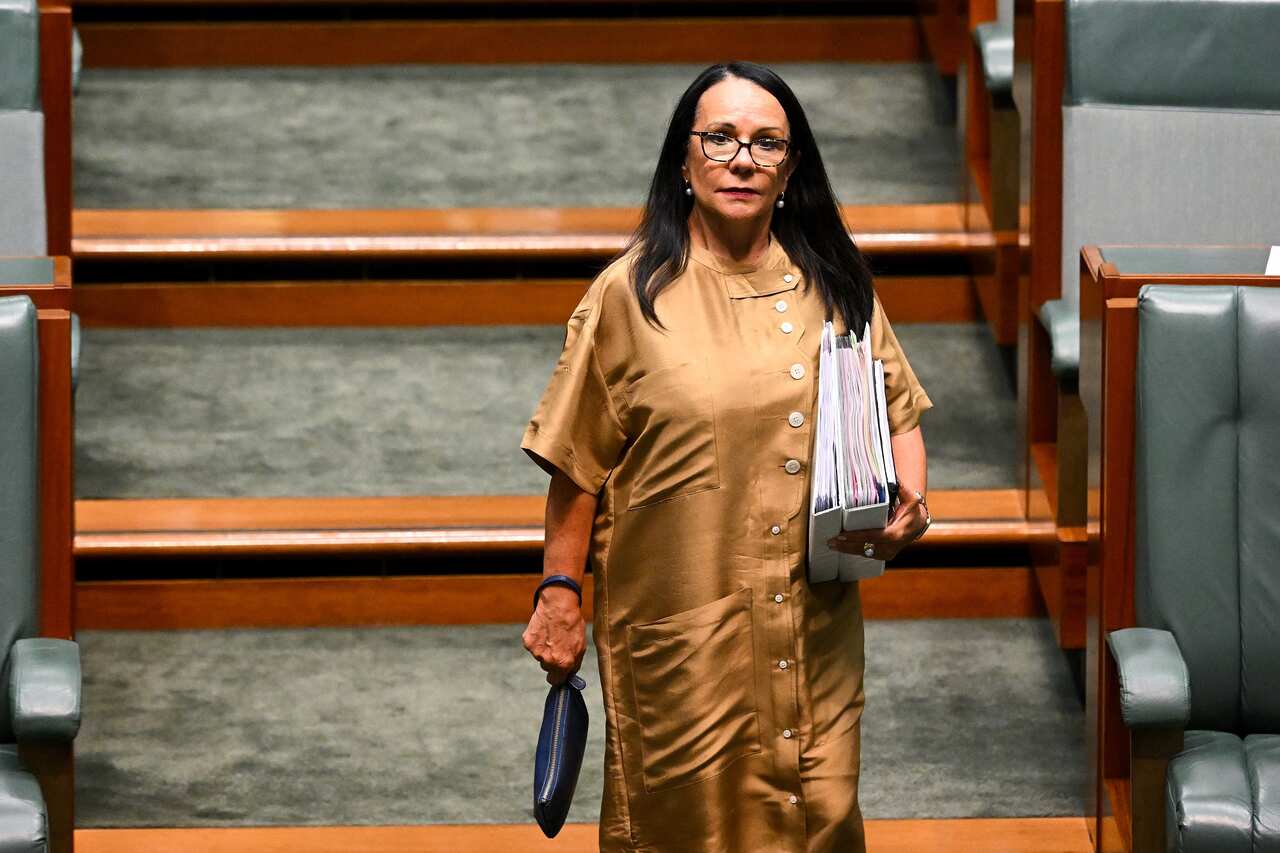
Minister for Indigenous Australians Linda Burney Source: AAP / Lukas Coch
The Voice wouldn’t be the first Indigenous advisory body set up by an Australian government.
The Hawke government established the Aboriginal and Torres Strait Islander Commission (ATSIC) in 1990, but it was abolished in 2005.
At that time, the Howard government was able to do this because ATSIC wasn’t enshrined in the constitution.
What is the Voice referendum?
The Albanese Labor government has committed to enshrining an Indigenous Voice to Parliament in the Australian constitution. To do this, it must hold a national referendum.
In the referendum, Australians :
A Proposed Law: to alter the Constitution to recognise the First Peoples of Australia by establishing an Aboriginal and Torres Strait Islander Voice. Do you approve this proposed alteration?
If a Yes vote is successful, an Indigenous Voice along the lines of that described above would be established permanently, or at least until another referendum was held.
The decision to enshrine the Voice in the constitution is based on recommendations from the Uluru Statement from the Heart, which came out of a long consultative process with Indigenous groups.
However, Prime Minister Anthony Albanese’s decision to pursue a constitutional amendment is contested by his political opponents.
Opposition leader Peter Dutton has previously suggested that his side would support a Voice legislated by parliament. However, the Liberal Party’s Coalition partners, the Nationals, have said they don’t support a Voice legislated by parliament.
Opposition leader Peter Dutton has previously suggested that his side would support a Voice legislated by parliament. Source: AAP
Changing the constitution via a referendum means clearing a higher hurdle than a federal election or plebiscite.
To win a plebiscite, such as the non-binding national plebiscite held on marriage equality in 2017, one side must secure a majority of votes.
However, there are two thresholds for a successful referendum: a majority of votes and a majority of states.
That’s just states, not territories; votes in the Australian Capital Territory and the Northern Territory count towards the first threshold but not the second.
Like a regular election, all eligible Australians aged 18 and over . If an eligible person fails to provide a valid and sufficient reason why they didn’t vote, they may be fined.
, each needing both an overall majority and a majority in most states.
The Voice will be the nation’s first referendum in almost a quarter of a century and, if successful, it will be the first time Australians have voted to alter their constitution since 1977.
The AEC has in a variety of languages to help people from culturally and linguistically diverse backgrounds understand the referendum process.
Australia’s referendum history. Source: SBS News
When is the Voice to Parliament referendum?
Although the date is still unknown, there are rules narrowing the window in which a referendum must be held once the parliament passes a bill that sets out the question to be put to voters, which happened in June.
Due to these rules, the Voice referendum can’t be held before mid-August or later than mid-January.
While it could technically be held next year, Albanese has insisted Australians will vote in 2023.
Prime Minister Anthony Albanese has insisted Australians will vote in 2023. Credit: AAP
And, like any federal election, referendums must be held on a Saturday.
Given those limitations, potential dates for the vote include 14 October, 4 November, 25 November or 16 December.
The most likely date, according to much media commentary, is 14 October, as it is sandwiched between sporting events (AFL and NRL finals and the Melbourne Cup), and outside school holidays. It’s also before the wet season in northern Australia sets in. The wet season, which starts in November, makes it difficult for members of some Indigenous communities to travel to polling booths.
What was the 1967 referendum?
In 1967, Australia voted to remove two provisions in the Australian constitution that discriminated against Aboriginal people.
The first of these provisions related to what is known as the ‘race power’:
The Parliament shall, subject to this Constitution, have power to make laws for the peace, order, and good government of the Commonwealth with respect to:- …(xxvi) The people of any race, other than the aboriginal people in any State, for whom it is necessary to make special laws.
The proposed amendment was to remove the words “other than the aboriginal people in any State” from this section.
This gave the federal government, rather than state governments, the power to make laws for Indigenous Australians.
Before the 1967 referendum, there were state-by-state differences in the laws that applied to Indigenous people.
For example, in NSW, Victoria and SA, Indigenous people were able to marry freely and vote freely (from 1962), but those living in WA and Queensland could not.
At the time, advocates for a Yes vote sought to put pressure on the federal government to use its new power to provide positive policies for Indigenous people.
The second provision altered by the 1967 referendum related to counting Aboriginal and Torres Strait Islander people in official population numbers.
It sought to remove the following section from the Australian constitution:
In reckoning the numbers of the people of the Commonwealth, or of a State or other part of the Commonwealth, aboriginal natives should not be counted.
The referendum was overwhelmingly won by the Yes side, with over 90 per cent of Australians in support.
As well as the legal changes it brought about, the referendum quickly took on an important symbolic value and it was followed by campaigns such as the 1972 Aboriginal Tent Embassy and the land rights movement.
Referencing the changes to Section 127, the final paragraph of the Uluru Statement from the Heart reads: “In 1967 we were counted, in 2017 we seek to be heard.”
However, , including that:
It gave Aboriginal and Torres Strait Islander people the voteIt officially granted Indigenous people citizen rightsIt gave equal rights in Australia
None of these ideas about the 1967 referendum are strictly true.
What is the Uluru Statement from the Heart?
The is the culmination of a series of dialogues held with First Nations representatives, which arrived at a consensus about what constitutional recognition should look like.
It is that calls for the establishment of an Indigenous Voice to Parliament enshrined in the constitution and a Makarrata commission for the purpose of treaty-making and truth-telling. Makarrata is a Yolngu word that refers to coming together after a struggle.
According to the statement, Makarrata “captures our aspirations for a fair and truthful relationship with the people of Australia and a better future for our children based on justice and self-determination”.
The sequence of the statement’s recommendations is also important, particularly a constitutionally enshrined Voice as the first order of business.
“We’re starting with the ‘big law’ – the Constitution is the highest law in the land. This is the best way for us to ensure tangible outcomes to improve the lives of First Nations peoples,” reads the official Uluru Statement website.
“To put it very simply, the Uluru Statement from the Heart is almost like a sales pitch to the Australian people as to why we need constitutional reform,” one of the statement’s authors, Professor Megan Davis, .
The Yes camp has often highlighted the consultative nature of the document’s construction, but some prominent No campaigners have said that the statement doesn’t reflect the will of all Indigenous people.
“There are a lot more Indigenous Australians out there who don’t feel like they’ve been represented through the Uluru Statement from the Heart,” Opposition Indigenous Australians spokeswoman Jacinta Nampijinpa Price has previously said.
Source: Facebook / Facebook/The Uluru Statement from the Heart
The Uluru Statement from the Heart was released in 2017 by a group of over 250 delegates near Uluru in Central Australia.
Its launch came after the 16-member Referendum Council engaged in dialogues with over 1,200 Aboriginal and Torres Strait Islander representatives across Australia over a six-month period.
Members of the Referendum Council include Pat Anderson, Megan Davis and Noel Pearson.
While the Uluru Statement was promptly dismissed by the Turnbull government and the Morrison Coalition government refused to support a Voice referendum, there was some progress on the design of the Voice during those years.
The Albanese Labor government was the first to fully embrace the document.
“On behalf of the Australian Labor Party, I commit to the Uluru Statement from the Heart in full,” were some of the first words Albanese said in his speech after winning the 2022 federal election.
The document also sets out a definition of sovereignty, a concept that has been a point of contention for those in the “progressive No” camp.
SBS Radio has shared the Uluru Statement from the Heart in 20 Aboriginal languages from communities in the Northern Territory and North Western Australia, and more than 60 other languages for Australia’s culturally and linguistically diverse communities.
What are the arguments for Yes and No in the Voice referendum?
The official Yes campaign pamphlet, released through the Australian Electoral Commission (AEC) outlines several main reasons to vote for the Voice.
It makes a two-pronged argument for the value of listening to Indigenous people’s advice on matters that impact them.
The first component of this is a moral argument: that Indigenous people should rightfully have a say in shaping policies that affect them.
The second is based on policy outcomes: If the government has more policy-making input from Indigenous people, this will ostensibly lead to better results in Indigenous health, education, employment, and housing.
Yes proponents also say the Voice would be a necessary mechanism through which to negotiate Truth and Treaty processes involving the federal government. Truth and Treaty are the subsequent steps for national reconciliation outlined in the Uluru Statement from the Heart.
The Yes camp says that entrenching the Voice in the constitution means that future governments won’t be able to remove it, which they see as a positive.
On the other hand, the No camp sees the idea of constitutional change as a negative.
“Putting a Voice in the Constitution means it’s permanent. We will be stuck with negative consequences,” the official No pamphlet reads.
The No pamphlet also says a Yes vote would be risky because “no issue is beyond its reach”, including “the economy, national security, infrastructure, health, education and more …”.
The No camp also argues that a constitutionally enshrined body “for only one group of Australians means permanently dividing Australians”.
“This goes against a key principle of our democratic system, that all Australians are equal before the law,” the No pamphlet reads.
The No pamphlet also says that Australians are being “asked to sign a blank cheque” as details about the Voice “would only be worked through after Australians have voted”.
Senator Jacinta Nampijinpa Price, the Opposition’s Indigenous Australians spokeswoman and prominent No campaigner has previously said: “Australians deserve details, consultation and transparency. Instead, we’ve been given a proposal that is risky, full of unknowns and enshrines division in the constitution.”
There is also a separate No camp, sometimes called the ‘progressive No’. As opposed to the ‘conservative No’ camp, which argues that a constitutionally enshrined Voice goes too far, the ‘progressive No’ say it doesn’t go far enough.
They take issue with the fact that the Voice will only have advisory powers, with the parliament and legislature maintaining ultimate decision-making authority.
They say that recognition of sovereignty and truth-telling is the key to real change.
Senator Lidia Thorpe, for example, has attacked the Voice to Parliament as
In a self-released Voice pamphlet, Thorpe say the Voice is “not a step in the right direction, but “another powerless advisory body” and that it’s a “destructive distraction” and would “absolve the government of its continued crimes”.
Independent Senator Lidia Thorpe and Walpiri elder Ned Hargraves speak during a press conference at Parliament House. Source: AAP / Lukas Coch
Who is involved in the Yes campaign?
Perhaps the most prominent campaign in support of an Indigenous Voice to Parliament is Yes23. Led by the group Australians for Indigenous Constitutional Recognition (AICR), it calls itself a grassroots coalition that is supported by many organisations.
Yes23 is currently organising and training volunteers to actively campaign in their local area, including knocking on doors, handing out flyers and making phone calls.
In parliament, the push for a Voice is , the Greens, and most independent MPs. Indigenous Australians Minister Linda Burney is also a prominent figure in the campaign.
A small number of Liberal MPs, such as Bridget Archer and Julian Leeser, . Former Liberal leaders such as Malcolm Turnbull and John Hewson have also expressed support for a Yes vote.
The premiers of all states and territories , including the Liberal premier of Tasmania Jeremy Rockliff.
Trade unions and the Business Council of Australia are making a rare show of unity in support for the Voice. Many unions are actively campaigning for a successful vote and prominent businesspeople, such as Michael Chaney and Daniel Gilbert, sit on the board of Yes23.
Notable Aboriginal and Torres Strait Islander figures in the Yes campaign include Professor Megan Davis, Noel Pearson, Thomas Mayo, Tom Calma, Marcia Langton and Pat Anderson.
They’re all long-term, prominent advocates for Indigenous social and economic justice who’ve been intimately involved in shaping the Voice proposal.
Davis, Anderson and Pearson were all co-chairs of the Referendum Council, a body set up in 2015 that consulted with hundreds of Indigenous people and eventually produced the Uluru Statement from the Heart.
Calma and Langton were co-chairs of the
Mayo is a signatory to the Uluru Statement from the Heart and a director for Yes23 and AICR. He also recently co-authored a book called The Voice to Parliament Handbook.
Pearson’s think tank, the Cape York Institute, also runs a subsidiary group called From the Heart that has been playing a prominent role in pro-Voice education campaigns. He’s also a director of Yes23.
Who is involved in the No campaigns?
The No campaign is being run by multiple groups with different reasons for opposing an Indigenous Voice to Parliament.
Recognise a Better Way and Fair Australia, the latter of which operates under the auspices of conservative lobby group Advance Australia, are two of the most prominent.
Earlier this year, they combined their efforts into a single campaign called Australians for Unity and, like Yes23, are mobilising people to campaign in their local areas.
Several prominent Aboriginal and Torres Strait Islander people are leading figures in the campaign, including Senator Jacinta Nampijinpa Price and Warren Mundine.
Senator Jacinta Nampijinpa Price is among those leading the No campaign. Source: AAP / Mick Tsikas
Mundine once served as national president of the Australian Labor Party, but quit the party in 2012 and ran unsuccessfully as a Liberal Party candidate for a lower house seat in the 2019 federal election.
The following year, he was appointed as chairman of the then Coalition government’s Indigenous Advisory Council by then-prime minister Tony Abbott.
Price formerly served as a councillor and deputy mayor of Alice Springs. Like Mundine, she also unsuccessfully ran for a lower house seat in the 2019 election. She was elected as an NT senator in 2022 and currently serves as the Opposition’s Indigenous Australians spokeswoman.
In parliament, both the Liberal and National parties are campaigning for a No vote although, as mentioned above, several Liberal Party parliamentarians .
Opposition leader since his party announced its formal opposition to the Voice earlier this year.
The National Party announced its opposition to the Voice even earlier, and party leader David Littleproud has regularly spoken against it in parliament and to the media.
Former Liberal Party prime ministers John Howard and Tony Abbott have also publicly criticised the Voice proposal, although the latter has been far more present in the No campaign.
One Nation leader Pauline Hanson has also long been an outspoken opponent of the Voice.
Some are also campaigning from a “progressive No” perspective. Former Greens – now independent – senator .
Thorpe has consistently demanded Truth and Treaty instead of what she calls the “powerless” Voice.
In , Thorpe said the government should call off the referendum, but also suggested there was still time for Labor to convince her to back the Voice.
Independent Senator Lidia Thorpe at the National Press Club in Canberra. Source: AAP / Mick Tsikas
What are the Yes and No pamphlets?
Australian law requires the AEC to send out official information to households at least two weeks before a referendum.
Both Yes and No camps in the Voice to Parliament referendum signed off on their official pamphlets in mid-July and they’re already available via the .
In terms of the print versions, AEC spokesperson Pat Callanan told ABC Radio Melbourne in mid-August that the organisation was “hoping to start getting those pamphlets out to mailboxes by mid to late August and then it should be out to all of Australia by the end of September hopefully”.
Neither the Yes or No pamphlets are fact-checked, even for typos, and are published exactly as submitted to the AEC.
However, SBS News has worked with the Royal Melbourne Institute of Technology’s FactLab CrossCheck team .
The official Yes and No pamphlets for the Voice referendum will soon be landing in mailboxes. Source: SBS News
Labor was initially hesitant to allow the pamphlets, arguing they had become outdated since Australia last held a referendum in 1999. However, the Coalition insisted that the practice be retained and Labor relented.
The pamphlets are written by majority groupings of politicians who support either side, although the legislation doesn’t clearly spell out how this process should operate.
Each side gets 2,000 words to make its case.
Labor, the Greens, pro-Voice Liberal MPs, and a host of independents were consulted on the Yes pamphlet’s contents.
The No campaign’s pamphlet was mainly written by Coalition politicians. “Progressive No” advocates such as Lidia Thorpe, who , were not consulted.
Under the banner of the Blak Sovereign Movement, the “progressive No” camp has released pamphlet.
The AEC has said it hopes the pamphlets will eventually be available in 55 languages, including 20 Indigenous languages. At present, no translated versions are available on the AEC website. The AEC has said that translations will be uploaded from the first week of September.
What will happen if the Voice referendum fails?
If a No vote is successful, an Indigenous Voice will not be enshrined, and the constitution will remain unchanged.
It’s unlikely another referendum will be held on the question in the short-term. Albanese framed the referendum as a in April.
“If this isn’t successful, it’s not like a month later there’ll be another referendum around,” he said.
In August, Albanese suggested an alternative form of recognition would not be implemented if the Voice referendum is not successful.
The Voice is one of three aspects of the Uluru Statement from the Heart – alongside Truth and Treaty – that Albanese’s government committed to after winning the 2022 federal election.
A No vote in the Voice referendum wouldn’t automatically impede the government from following through on its commitment to processes like establishing a treaty.
But some advocates for the Voice have suggested that its establishment is .
“I just don’t know how we will be able to do that when we are still voiceless in the community,” Sally Scales, a member of the Voice referendum group, told SBS News in May.
“How would we be able to do a Treaty process if we don’t have a voice to have that negotiation with government?”
How do you cast your vote in a referendum?
Unlike federal elections, where you choose parties and candidates by filling in numbers on ballot papers, the referendum paper will ask you to answer the question on it by writing one word: “Yes” or “No”.
The process is being overseen by the AEC, and, as with other elections, there will be a number of ways you can cast your vote.
In-person voting
If you’re on the electoral roll, you can go to a polling place to cast your vote. Just like the federal election, there will be thousands across the country in places such as schools, community centres, church halls and surf lifesaving clubs.
If you’re eligible to enrol to vote and haven’t yet done so, you can do it
The AEC says you can cast your referendum vote at any polling place in your state or territory. Polling places will be open from 10am to 6pm on the day. The AEC will list polling places on its website.
Once you’re there, your name will be marked off the electoral roll and you’ll be given the ballot paper. Take it to one of the cardboard booths in the polling place, write Yes or No on the paper and then put it in the ballot box.
Postal voting
If you can’t make it to a polling place on the day of the referendum, you’re eligible to cast a postal vote – either on voting day or during the early voting period.
If eligible, you’ll be able to apply for a postal vote , however applications have not yet opened for the 2023 referendum. Once they have, postal vote applications will be open until 6pm on the Wednesday before the referendum polling day.
If you’re already registered as a , you’ll receive your referendum ballot paper in the mail.
Overseas voting
If you’re overseas during the referendum voting period, you can vote by postal vote or in person at an overseas voting centre.
There will be voting centres at embassies, High Commissions and other Australian diplomatic outposts overseas.
If you vote by post, it has to be received by the postal voting deadline, which is 13 days after the referendum date.
The AEC says you don’t have to vote in the referendum if you are overseas, but you should . If you don’t, it will write to you at your address in Australia asking why you didn’t vote.
If you’re working in Antarctica, referendum rules mean you can vote by telephone.
The Voice referendum ballot will come with clear instructions to write “Yes” or “No”.
Voting in remote areas
The AEC will be servicing more remote areas in this referendum than in any other vote held in Australia.
Teams will visit remote areas in the three weeks before referendum voting day to collect votes.
Telephone voting
This option is only available for people who are blind or have low vision, or who are working in Antarctica.
You’ll need to contact the AEC to register and confirm you are eligible to vote in the referendum by phone. Once you have registered, you’ll receive a separate phone number to call and cast your vote.
Registration for telephone voting will be available after the issue of a writ in the referendum, and will be provided .
Residential care, homeless shelters and prisons
The AEC will send mobile polling teams to many residential aged care facilities, residential mental health facilities, homeless shelters and prisons.
When will we know the results of the referendum?
The counting process for the referendum will be similar to that employed for votes for the House of Representatives in a federal election, with the key difference being people are only answering Yes or No on one ballot paper in the referendum.
The streamlined counting process (federal election vote counting needs to take preferences into account) means it’s likely we’ll know the result on the night.
However, the AEC uses the slogan ‘right, not rushed’ on its website and says if the overall result is close, it may require up to 13 days after polling night for the result to be known. This is the time frame the AEC allows for postal votes to come in.
As for the mechanics of the vote count, the AEC says every vote cast on the day of the referendum will be counted that night.
Most of the votes counted at early voting centres and a small number of postal votes will be counted as well.
Results will be uploaded to the AEC’s Virtual Tally Room as they’re counted, both on the day of the referendum and the days following.
The AEC says it will only declare the referendum result when it’s “mathematically impossible for any other result to occur”.