



[ad_1]
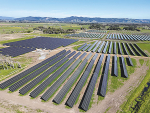
Adding solar power generation to the rural economy is picking up pace, with one of the country’s leading solar generation companies announcing plans for another 150 GWh (gigawatt-hours) per year at three Canterbury sites.
Lodestone Energy says it has consents for agrivoltaic solar farms at Clandeboye, Mount Somers and Dunsandel.
Daniel Cunningham, Lodestone’s general manager development, says, “In keeping with Lodestone’s agrivoltaic approach for all farms, the Dunsandel farm, which recently received consent approval from Selwyn Council, is located on a 100-hectare block leased to Lodestone and will continue to maintain productive farming activity.
“This combined use of agricultural and solar productivity results in more efficient use of the land and creates new value for the nation.”
The Dunsandel farm will connect via Orion’s new Norwood GXP (Grid Exit Point, a facility where Transpower’s national grid interfaces with a local distribution network), while the Clandeboye and Mount Somers farms will connect to the Alpine Energy and Electricity Ashburton networks respectively. Construction for all three is planned from this year through to 2026.
Lodestone came online last year with the country’s largest grid-connected solar farm, at Kaitaia, and has four more in development at Edgecumbe, Waiotahe, Whitianga and Dargaville.
Lodestone managing director Gary Holden says diversifing into the South Island is a key part of the company strategy. “Getting enough volume, coming on-line with pace, is a critical part of satisfying consumer demand.
“Our objective is to ensure the farms are welcomed by local councils and neighbours and to find as many like-minded customers as we can. In the end, those willing to invite these farms into their future planning will play a key role in the energy transition to an electricity market with 100% renewable energy.”
Meanwhile, another agrivoltaic developer, Far North Solar Farm (FNSF) is seeking resource consent for a large development near Twizel and Lake Benmore in the Mackenzie Basin.
FNSF, which already has several North Island plants underway as well as one at Waipara in North Canterbury, says the 420MWp (megawatt peak) solar farm would produce enough renewable electricity to power around 100,000 homes and also create the largest ecological restoration project ever undertaken in the area.
The site is currently in cropping and dairy support. FNSF says it was chosen as it is flat and sits within an already highly modified landscape of existing power infrastructure beside the Ohau C hydropower station and national electricity grid transmission lines.
FNSF director John Telfer says at least 89ha of the site would be ecologically restored and the company was actively working with stakeholders to refine how other conservation values could also be achieved.
“The environmental restoration plans will see upwards of 500,000 native plants indigenous to the area reintroduced, providing a significant increase in the overall ecological value of the site as it currently exists. On top of that, we’re also looking at how we can use the solar farm to act as a sanctuary for some of the lesser known but equally threatened insext species we have in the Mackenzie.
“Panels will only cover around 30% of the entire site and the perimeter will be fenced off from pests, so it’s perfect for invertebrates. Everyone involved is excited by the conservation potential we could achieve, and we’ve been told nothing else like it has ever been attempted in the Mackenzie on this scale,” said Telfer.
Consent was refused for a solar farm near Tekapo due to ecological concerns but Telfer said a major difference with the proposed site is that farming activities have already destroyed any ecological values.
[ad_2]
Source link
