



[ad_1]
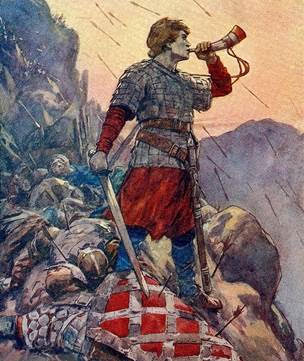
MOST OF US use our votes in one of three ways: as a weapon; as a shield; as a tool. With early voting commencing in a month’s time, the overwhelming majority of New Zealanders would appear to be preparing to use their vote as either a weapon or a shield. All the signs point to those intent upon weaponising their vote being the largest fraction of the electorate. The number intending to use their vote as shield against their enemies is, however, unlikely to be significantly smaller than that of the weaponisers. Sadly, only a tiny minority of voters will be brave and/or principled enough to cast their votes positively in 2023. This is not going to be a happy election.
It was never going to be easy for Labour to live up to the hopes and encouragement of the voters in 2020. Not since the joyful election of 1972 made Norman Kirk New Zealand’s twenty-ninth prime minister, and gave him a whopping parliamentary majority of 23 seats, had so many Kiwis used their votes constructively as a tool. Not only were their ballots deployed as an enormous “Thank you, Jacinda!”, but many were also given to Labour as a way of facilitating the “transformation” which its leader had promised, but which Covid-19 had interrupted so dramatically.
Tragically, the Labour cabinet, caucus, and party organisation proved unequal to the challenge of using the tools which an astonishing 50.01 percent of the voting public had given them. Something strange and sinister appeared to overtake Jacinda Ardern, darkening her sunny political disposition. Her Cabinet was no help, and neither was her caucus. It was almost as if they were annoyed and/or affronted by the tools thrust into their hands. It was for them to set the agenda, not 1,443,545 presumptuous voters.
All of Labour’s team had failed to read the events of 2017-20 correctly. Most especially, they had failed to grasp that the success of their Covid response was based almost entirely on the state’s decisive intervention on behalf of the “Team of Five Million”. Those aligned to the ideologies of the Right knew exactly what they were looking at as the government seized control of the pandemic response. That’s why they were so furious. Allow the voters to see what a mobilised state could do for them and, inevitably, they would want more.
Painful though it may be to acknowledge, Labour’s ministers were as ill-disposed to keeping the state’s shoulder to the wheel as the Right. Rather than being inspired by the mass support for their Prime Minister and Party, they seemed terrified of it. Rhetoric was one thing, reality another. On the re-elected government’s agenda their was just one item: getting everything back to normal as quickly as possible.
In politics, executing such an unheralded handbrake-turn will always exact a high psychological price, and the Ardern-led government proved no exception. Working against the expectations of her supporters changed “Jacinda” – and not in a good way.
But, the political price incurred by Labour’s refusal to keep on moving forward was much, much higher. Hopes raised, and then dashed, will swiftly curdle into a witches’ brew of disappointment and fury. When next they enter the polling-booths, those who believe themselves betrayed by “Jabcinda” will wield their ballot papers like a butcher’s knife.
In doing so they will add their numbers to the roughly one-third of the electorate who have always wielded their votes as weapons against those who would upend what they still believe to be the natural order of things.
At the core of this army of nay-sayers are the inhabitants of rural and provincial New Zealand. These “Heartlanders” have always looked upon the cities as sinks of iniquity and havens for the undeserving poor. Every three years, National and Act supporters grind their teeth in fury as impoverished citizens, many of them brown, turn out in support of Labour’s redistributive policies – using their votes as shields against the threatening depredations of the Right.
In uneasy alliance with the Heartlanders are the wealthy citizens of the big cities. Although they live, safely sequestered from the poor and the brown, in the leafiest suburbs of the cities, it is more difficult for these citizens to weaponise their votes in the manner of the farmers and their small-town friends.
The people who work in their factories and warehouses, clean their offices, serve in their shops and fast-food joints, and build the nation’s infrastructure for them to make profits out of are, after all, people they see every day. Somewhere in the recesses of their social consciousness, they understand that the working-class is something their own class cannot do without. When things are going well, they may even be persuaded to help the workers. When things start going badly, however, or when – God rot them! – their employees start joining unions and taking their destiny into their own hands, that’s when the wealthy turn their ballot papers into pistols and start shooting.
It is the working-class voters who, most of all, yearn to use their votes in the way their grandparents and great-grandparents did, as tools to build a better world. Every three years they hope-against-hope that Labour will ask them to create something worth having with their votes, but election-after-election they are disappointed. Reluctantly, and without enthusiasm, they lift the protective shield of the franchise against the worst the Right can offer – keeping Labour viable solely out of fear of meeting something worse.
Labour, as the lesser of two evils, remains the workers’ choice. Even if, in 2023, it no longer represents the working people who joined its ranks in 1923. Labour, now, is the party of the people who teach the working-class; who take care of it when its sick; who keep it afloat when jobs are scarce and puts its worst casualties up in hotels when they have nowhere else to go. They’re the people who, when the kids of the working-class start breaking bad, defend them in court, write reports about them, give them counselling, and mange them when they’re released from prison. There are tens-of-thousands of these people: not quite bosses, but not quite workers either. The American sociologists, John and Barbara Ehrenreich, called them the “Professional and Managerial Class” – and they have made the labour and social-democratic parties of the world their own.
The problem with this intermediate class is that its top two priorities are: to preserve the institutions that employ it; and, to keep the power relationships within those institutions from changing in ways that threaten their status. These essentially conservative priorities make the Professional and Managerial Class extremely difficult to like. They may talk the talk of “progressive politics”, but they are far too risk averse to walk it. Indeed, they have become the living proof of the American socialist journalist, Upton Sinclair’s, famous quip: “It is very hard to make a man understand something, when his salary depends upon him not understanding it.”
In this election, the National Party has its knives out for the professionals and managers of the public service, so no one should be surprised to see them voting defensively for what is, now, their own party. Labour’s problem, however, is that it has given far too many New Zealanders far too many good reasons for wanting to punish it.
Because, when all is said and done, Labour was the party which, in 2020, led half the country to the mountain-top, only to decide that if the promised land had no need of bosses, then it might also have no need for managers and professionals like themselves. Daunted by this terrifying prospect, they opted to proceed no further.
But you cannot show people the gates of heaven, and then turn around and go home. Not when there’s another election in three years’ time. Not when your party has ended up giving the New Zealand electorate so little to defend, and so much to punish.
[ad_2]
Source link
