



[ad_1]
If there is one marker of Bengaluru’s social life that has persisted where others have vanished, it is the city’s clubs. While many of the older Bengaluru clubs are over a century old and known beyond the city, others have kept their history to themselves. One such club is the Basavanagudi Union and Services Club, which has had members from this quiet corner of the city since 1901 – and atypically for a club of this age, has had no association with the British.
At the outset, the building that the club was housed in was not entirely typical of early Basavanagudi architecture, having a roof made up of Mangalorean tiles. According to Pankaj Modi of the Indian National Trust for Art and Cultural Heritage (INTACH), flat roofs were more common at the time. One such example is one of the first houses built in Basavanagudi, the house of Dewan M N Krishna Rao, which was built with a Madras-style terrace.

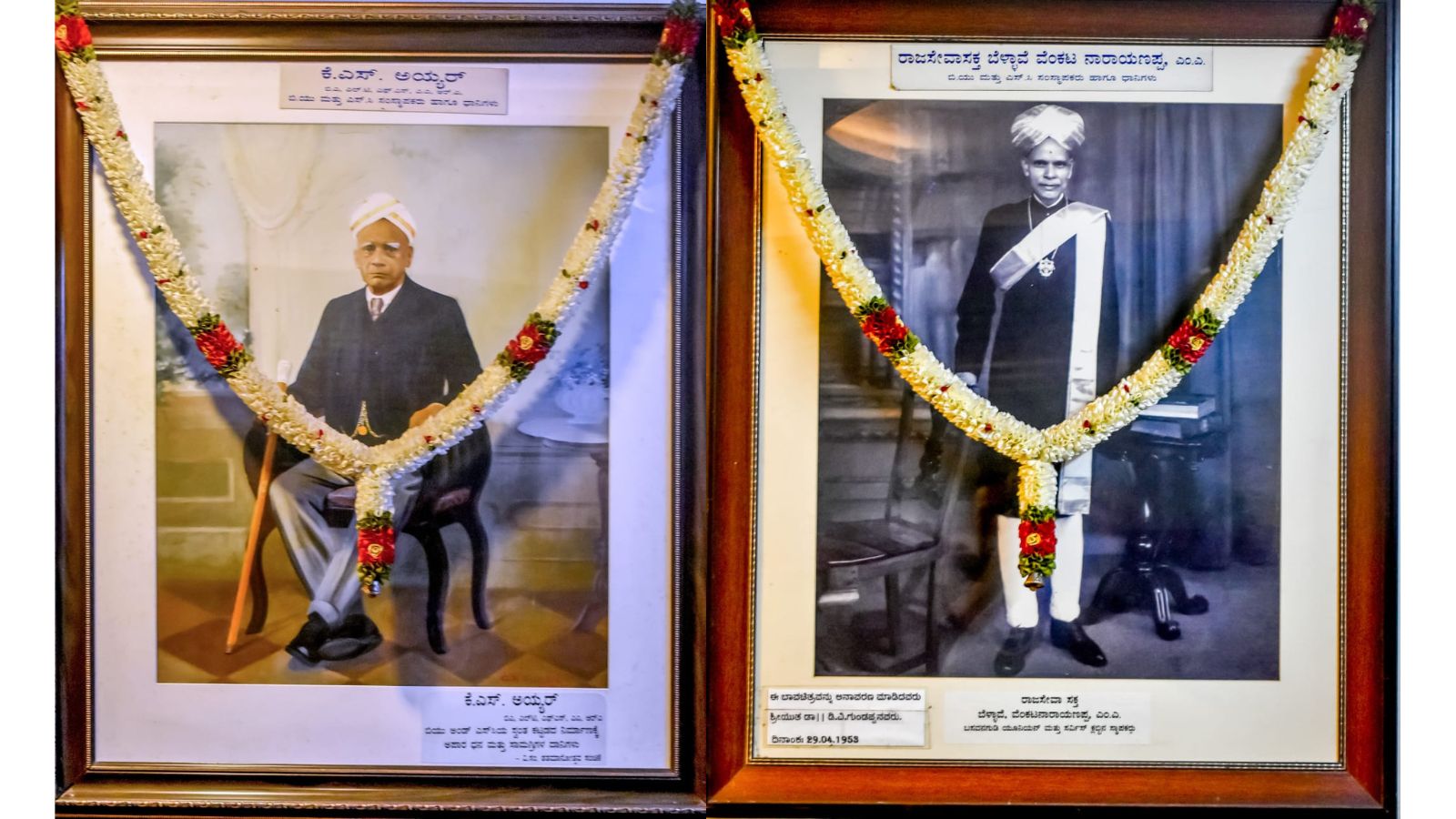
The founder of the club was Bellave Venkatanaranappa. According to Meera Iyer’s Discovering Bengaluru, he was a physics professor at Central College as well as one of the founding members of the Kannada Sahitya Parishad.
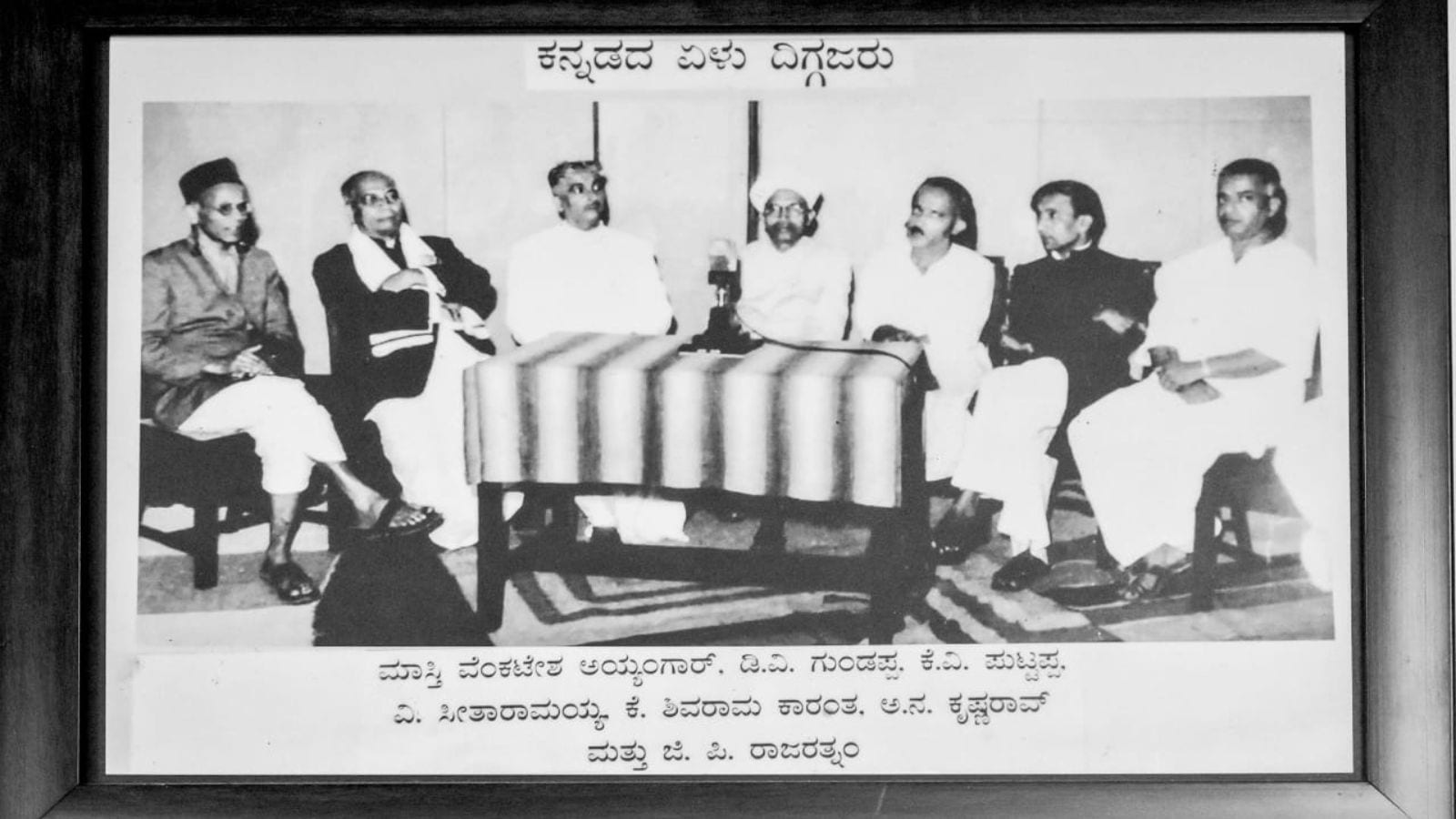 In the early days that Gundappa describes, the membership would have originally been restricted to men above the age of 55. (Express photo by Jithendra M)
It is therefore appropriate that several later members of the club ended up as defining figures of Kannada literature. One such person was D V Gundappa, the author of Mankuthimmanna Kagga, one of the most prominent Kannada works of the time.
If Gundappa were to come to the corner of Basavanagudi where the original building stood today, however, he would not immediately recognise it – the club, whose strength has reached 1,400 members as of 2023, had to replace the building to accommodate its members.

 Another doyen of Kannada literature who was frequently seen at the club was Jnanpith awardee Masti Venkatesh Iyengar, whose presence earned the club the informal nickname of ‘Masti Club’.
However, the history of the club is still apparent to those who look – for instance, a portrait of the founder, unveiled in 1953 by Gundappa himself, who described the club as a goshti Mandira or temple of the congregation.
According to Gundappa, Venkatanaranappa had personally helped with the construction of the walls and hauling bricks in the early days. Gundappa also shared an anecdote on the occasion, “I remember vividly the two or three times that he brought me here and tried to teach me how to play cards. He realised quite soon that I was incapable of succeeding in learning cards.”
Most Read
India versus New Zealand: Mohammed Shami has mastered the art of bowling out batsmen, like Wasim Akram and Waqar Younis did
Vishal Bhardwaj thought Kaminey won’t work because nobody was getting along on set: ‘There was so much conflict…’
See More
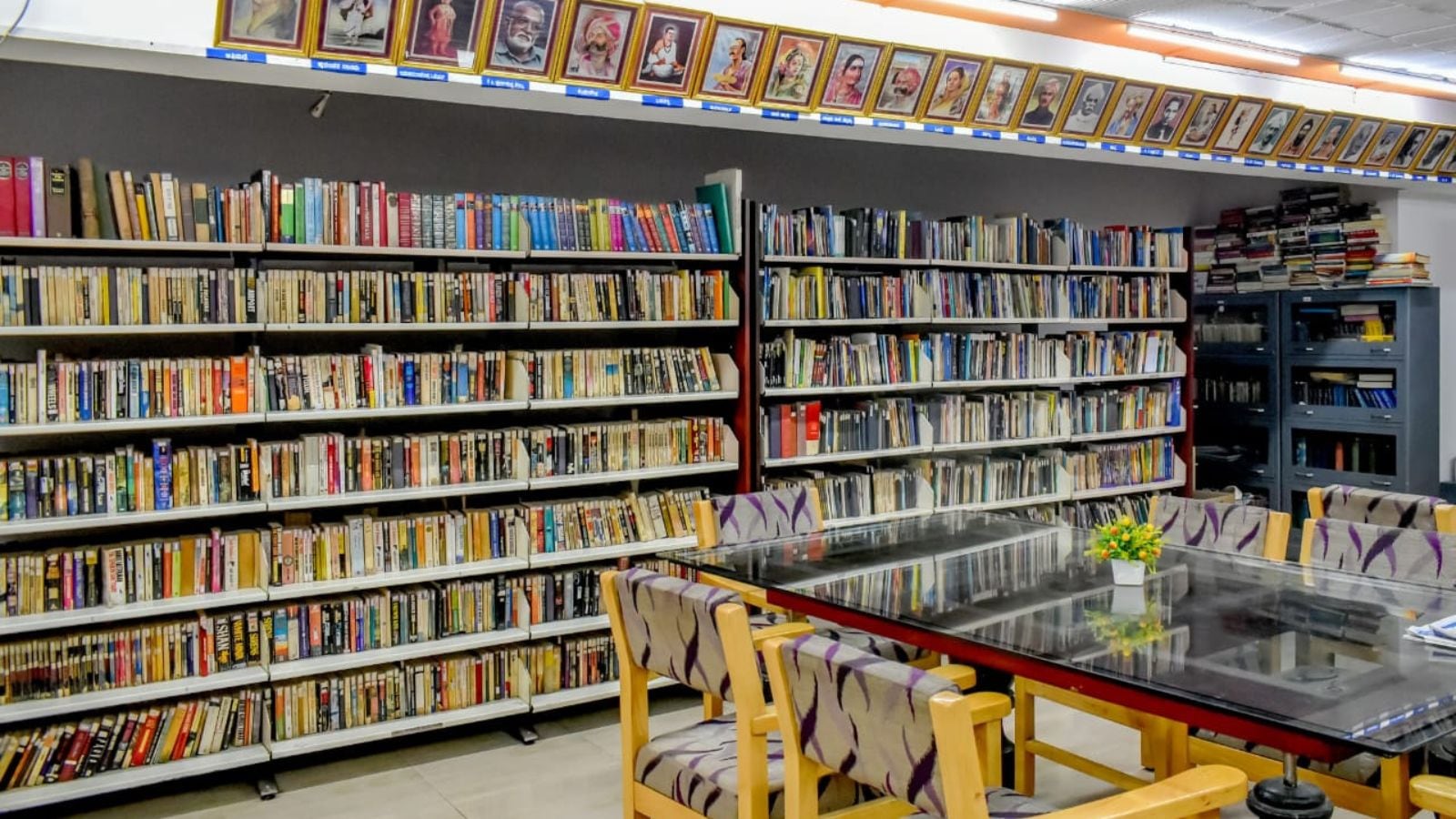 Slabs near the entrance also record the early members who had taken a lifetime membership for a sum of Rs 200. (Express photo by Jithendra M)
In the early days that Gundappa describes, the membership would have originally been restricted to men above the age of 55. Those restrictions have fallen away with the years. According to club president Madhav Moorthy, “Even today, there are more senior citizens as members of the club….even the younger members are in their 40s.” The club did hang on to some aspects of the old club for a long time – for example, there was no bar of any kind until the 70s.
Another doyen of Kannada literature who was frequently seen at the club was Jnanpith awardee Masti Venkatesh Iyengar, whose presence earned the club the informal nickname of ‘Masti Club’. Even today, some of the older club members who congregate over a game of cards in the morning still remember seeing him. According to club member Raghunath, Iyengar would arrive at precisely 5 pm for a game of cards every day, leaving two hours later. He is still commemorated in the club with a library in his name.
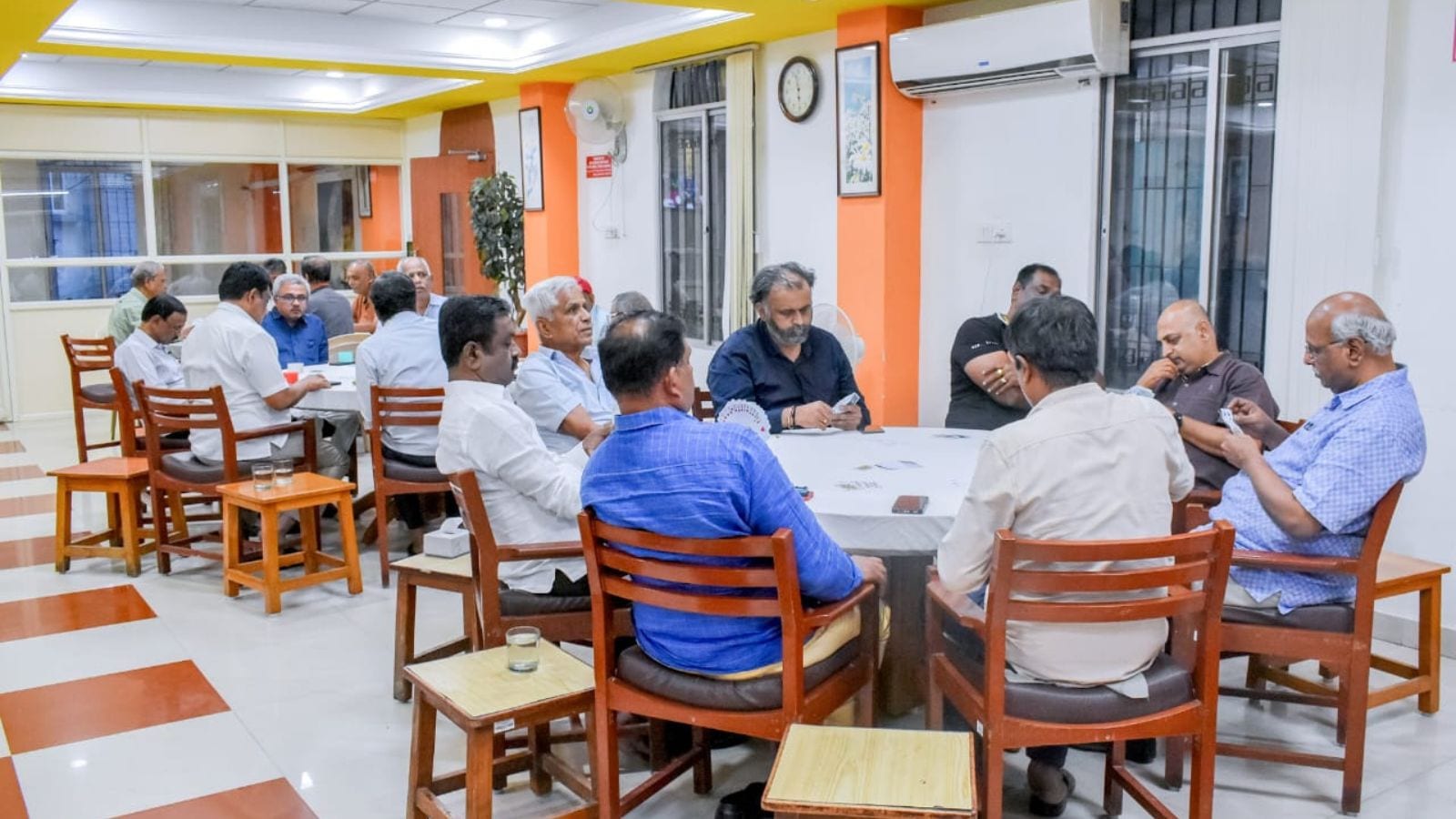 The club’s strength has reached 1,400 members as of 2023. (Express photo by Jithendra M)
Slabs near the entrance also record the early members who had taken a lifetime membership for a sum of Rs 200. Among these was C V Kumaraswami Sastri, who was once a judge of the Madras High Court and held the title of Dewan Bahadur. Such titles are not a one-off. One Dr C B Rama Rao, who had served as a district surgeon, held the title of Rao Bahadur.
[ad_2]
Source link
