



[ad_1]
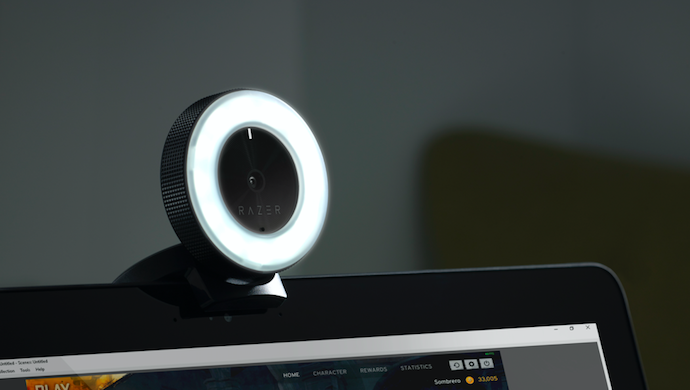
The Razer Kiyo camera
The article was first published on October 22, 2020.
For a leading global gamer lifestyle brand such as Razer, product development is the centre of the business that they are doing.
Founded in 2005, the company has had a long history in creating products that enable gamers to play games, engage with each other, and identify with the gamer lifestyle. It has won the Best of CES award consecutively for seven years –and has no plan to stop innovating. This year alone, despite a raging pandemic, Razer continues to launch new products such as the Razer Kiyo camera and the Razer Seiren X microphone, among the few.
In fact, as part of its effort to help the fight against COVID-19, the company also introduced a fully automated mask line.
Certainly, there are several things that startup founders can learn from the gaming giant. This is why e27 speaks to Ayush Sharma, the Lead Product Developer for Mouse Category, and Andrew Philippou, the Product Developer for Keyboard Category, to understand how Razer develops its products, the challenges that they are facing, and how they get through it.
What you can find in this article:
1. Principles and process of product development
2. Product testing
3. Challenges in product development
4. Next steps
Principles and process of product development
When asked about the key principles of product development that the company applies, Sharma starts by pointing out that as a business that targets gamers, Razer needs to have a deep understanding about the needs of their customers. And that begins with putting themselves in their customers’ shoes.
“We are all gamers. Not just those of the [product] team; even people who are not involved in the product development process. We all play games; we love games. So we really understand the needs of all types of gamers,” he says.
Also Read: Razer makes first green investment in plastic-free daily essentials brand Bambooloo
“We also have a team of passionate gamers and e-sports athletes and streamers that we continuously work with,” Sharma continues.
Speaking to e27 on a separate occasion, Philippou agrees to the explanation.
“It all comes down to addressing the needs of individuals,” he adds. “And just looking for opportunities to solve problems and make things better.”
Philippou then gives an example of Razer Kiyo (pictured), one of their recent releases. The product itself is a web camera with a built-in ring light that enables newbie broadcasters to set up and use the lighting correctly for their sessions.
The development of this product stems from the team’s understanding of the struggles faced by newbie broadcasters: Setting up and positioning their camera and light correctly. Having a product that combines both features in one device can help simplify the works for these users.
In developing a product, Razer begins by creating the concept of a product. There are two ways that a concept can be built upon: First, the engineering team can work on a new area of technology for the product team to consider creating a product based on. Second, they can also build a product based on the team members’ combined experience or inputs from users.
According to Philippou, the use of data plays a great role in this process, especially in deciding which problems to solve.
“We produce products that can solve issues that users are facing, but we do it in a way that is sustainable from the business perspective,” he says.
The team also aims to be “laser-focused” in deciding the main purpose of a product, instead of trying to create a product that “tries to do everything”, as Sharma suggests. They divided their target demographics based on the types of games being played or the purpose of the products.
“Then we basically flesh out that concept, add all the details to it, and have a vision of what that product needs to be and how that’s going to address all the needs and wants of our customers,” Sharma explains.
Also Read: After Razer and Grab, China’s Ant Financial applies for digital banking licence in Singapore
“Once that is done, we essentially go to the feedback phase where we make a few hundred or a thousand prototypes. Then we send it across to gamers across the globe … We also work with a bunch of partners and even external engineers and scientists. We tweaked those designs until we are satisfied with the results,” he continues.
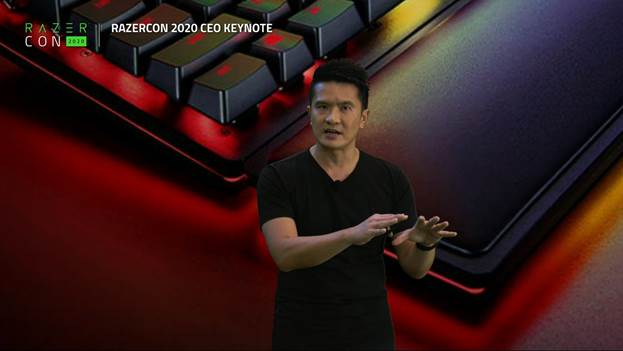
Razer CEO Min-Liang Tan at RazerCon 2020
Within the company, different individuals work on different products, but they are all considered as under one team. Each week, the product team conducts a routine brainstorming session where they can share ideas freely. They are also able to test out each other’s work.
“We also look out to develop synergies within our products,” Sharma adds.
While the products team works mostly with the engineering and software teams, they also work closely with marketing.
Product testing
Another crucial part of product development is testing. According to Sharma, this process is being divided into two parts: Subjective testing (how potential users feel about the product and how they would like to use it) and objective testing (testing the quality of the product itself).
Subjective testing is the part where Razer sends product prototypes to gamers, e-sports athletes, and other influencers in the industry to get their feedback. In contrast, objective testing is being done in the company’s internal laboratories or partner organisations.
“We work with different companies to develop, for example, our ball switch sensor and other related technologies. We take their help to test our products as rigorously as we can, and we keep on fine-tuning them to perfection,” Sharma explains.
But what if a product turns out to have flaws in it, and the flaw is only revealed after the product is being launched? According to Sharma, the first step is to admit there was an issue.
“Then we work with our partners to ensure that the product got an update that fixes the issue and essentially addresses all the other concerns that the customers have raised,” he explains.
Also Read: Crypto payments firm TripleA secures US$4M led by Razer’s VC arm
Challenges in product development
Philippou and Sharma gave a similar answer when asked about the challenges they faced in product development.
For Philippou, it is all about balancing idealism and business. Developers certainly want to understand customers’ challenges and explore all the possibilities the technology can offer. But they must also consider the commercial side: Is there a big enough market for such a product? Is it going to be sustainable?
“So it’s been about, from my perspective, opening my thought process for developing products and making sure that they make sense for both the end-user as well as the business,” he elaborates.
As for Sharma, the challenge lies in ensuring everyone is happy with their products.
“We obviously get so much feedback and requests from our community … And it takes a lot of time to perfect and fine-tune a product. So I think the biggest challenge is to ensure that we have a good balance of the right portfolio,” he says.
Next steps
The ongoing pandemic has impacted the global tech ecosystem greatly, but according to Philippou, Razer can handle and finish its projects on time. In fact, in its recent RazerCon 2020 event (which has hosted virtually), the company announced a list of new products for its customers including the Iskur Gaming Chair, the Tomahawk Gaming Chassis, and the highly sought-after Sneki Snek Plushie.
—
Echelon Asia Summit 2023 is bringing together APAC’s leading startups, corporates, policymakers, industry leaders, and investors to Singapore this June 14-15. Learn more and get tickets here.
Echelon also features the TOP100 stage, where startups get the chance to pitch to 5000+ delegates, among other benefits like a chance to connect with investors, visibility through e27 platform, and other prizes. Join TOP100 here.
Image Credit: Razer
The post For gamers by gamers: How Razer incorporates its understanding of user behaviour into product development appeared first on e27.
[ad_2]
Source link
