



[ad_1]
The 1953 coup d’etat in Iran ushered in a period of exploitation and oppression that has continued – despite a subsequent revolution that led to huge changes – for 70 years. Each year on August 19, the anniversary of the coup, millions of Iranians ask themselves what would have happened if the US and UK had not conspired all those years ago to overthrow Iran’s democratically elected leader.
Iran, the Middle East and, arguably, the whole world may well have been profoundly different. Apart from rewriting the destiny of Iran and its neighbours, the coup paved the way for a series of imperialist interventions and the toppling of democratically elected governments across the global south. Perhaps Washington might have thought twice before plotting coups in Guatemala in 1954, Congo in 1961 or Chile in 1973, if they’d been unable to overthrow Iran’s prime minister, Mohammad Mosaddegh, so easily and profitably.
As the democratically elected leader of Iran from 1951 to 1953, Mosaddegh championed nationalisation of Iran’s oil industry. This had previously been in the hands of the Anglo-Persian Oil Company – a British company, founded in 1909 after the discovery of a large oil field in Iran, which would later become BP.
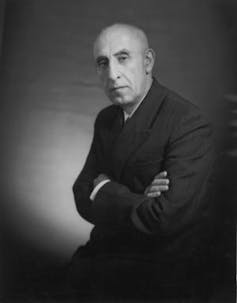
In March 1951, Iran’s parliament voted to proceed with nationalisation. This caused consternation in the west – most notably in Britain, where the prospect of nationalisation was seen as potentially hugely damaging to the economy. Furthermore, it would have undermined Britain’s influence in the Middle East. Plotting to depose Mosaddegh began in earnest.
In the event, the coup – named Operation Ajax – was a joint venture between the CIA and MI6. The shah, Mohammad Reza Pahlavi, who had recently fled the country after an earlier plot to remove Mossadegh had failed, returned to Iran.
Within a short period, he had tightened his grip on the country’s security services and imposed a dictatorial regime which ruled through brutality and fear. Pahlavi banned all opposition political parties, and many of the activists who participated in the movement for nationalisation of oil were arrested or fled the country.
Government by fear
In 1957, the shah established an internal security service, Sazman-e Ettel’at va Amniyat-e Keshvar (Savak), which essentially ran Iran at the shah’s bidding. From then until 1975, only two major political parties were allowed to operate, the People’s Party (Ḥezb-e Mardom) and the New Iran Party (Ḥezb-e Iran-e Novin), and all parliamentary candidates had to be approved by Savak.
Both parties in reality were wholly under the shah’s control. The parliament only existed to rubber-stamp his decisions, as did the prime minister – who the shah appointed.
In 1975, the shah took his domination of Iranian politics further, establishing a single party, the Party of Resurrection of the Iranian Nation (Hezb-e Rastakhiz), which all Iranians were obliged to join. By 1979, when Iran rose up in a popular revolution, it was a virtual absolute monarchy, with the shah’s will enforced by the dreaded Savak secret police.
Within months of the revolution, though, Iran’s religious authorities took control under the leadership of Ayatollah Ruhollah Khomeini. The Islamic Republic quickly established its own secret police, Savama – [Sazman-e Ettelaat Va Amniat Meli Iran](https://en.wikipedia.org/wiki/Ministry_of_Intelligence(Iran))_ – which used many of the same brutal methods as Savak.
‘Woman, Life, Freedom’
This week, Iranians will recall the 1953 coup as they prepare protests ahead of the anniversary of the “Woman, Life, Freedom” uprising. This movement began in September 2022 after the death of Mahsa Amini at the hands of the morality police – who patrol the streets tasked with enforcing the laws on Islamic dress code in public – for the “crime” of not wearing her hijab (headscarf) in the approved manner.

Stephen Chung/Alamy Live News
The resulting explosion of unrest has posed the most serious challenge to the Islamic Republic in its history. Although the state tried to crush the demonstrations from the beginning, the protesters have defied police brutality and the prospect of severe punishment, which included public executions and hundreds of deaths of protesters at the hands of the security forces.
At the same time as battling the oppression of their own state apparatus, ordinary Iranians are also suffering under the brutal US-imposed regime of sanctions. In the past five years, these sanctions – reimposed by Donald Trump after he unilaterally pulled the US out of the Iran Nuclear Deal, which had been signed by his predecessor Barack Obama in 2015 – have devastated the Iranian economy. Soaring inflation and devaluation of the national currency have caused serious hardship for ordinary Iranians.
As they fight for a better future, Iranians clearly grasp how, 70 years after the coup snuffed out their fledgling democracy, their internal struggles are still being influenced by foreign powers.
And they ask themselves if Mahsa Amini, and also Nika Shahkarami and Sarina Esmailzadeh – two other women beaten to death by members of the state apparatus for protesting – as well as hundreds of other young Iranians, would still be paying with their lives in Iran’s struggle for basic rights today if the 1953 coup had not happened.
[ad_2]
Source link
