



[ad_1]
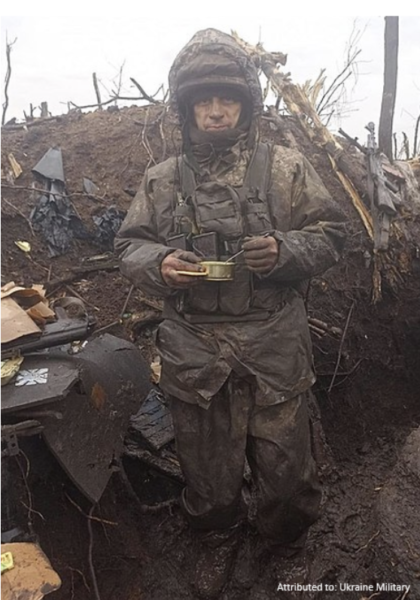
The rain has started in Ukraine. The famous rasputitsa, or mud season during which a combination of heavy rain and increasing cold slows down military operations. The rasputitsa is a natural milestone for any campaign in this part of the world. Ukraine is largely flat and bisected by large rivers, so the rain turns many places into muddy bogs and limits vehicle movement to formed roads. It is a hard season to fight in, soldiers are uncomfortable and supporting them logistically is almost impossible. If an operation is not finished when the rain starts, nature forces it to stop during autumn. So, what can we expect to see in Ukraine in the coming weeks and months?
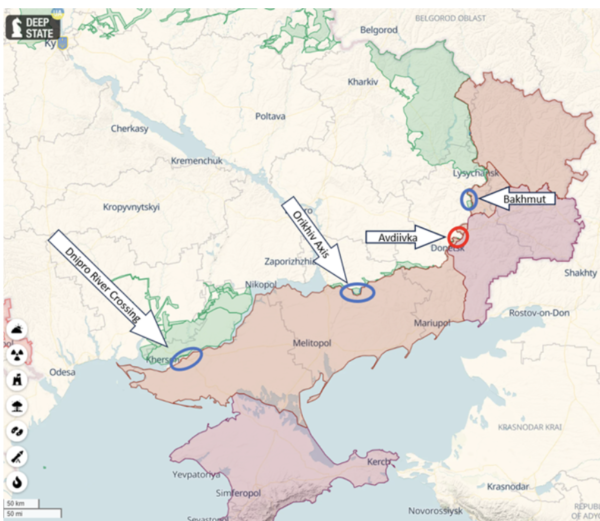
Realistically, this natural event signals culmination of Ukraine’s 2023 offensive. Activity will continue along the frontline at places like Bakhmut, Avdiivka, the Orikhiv Axis or the Dnipro River Crossing. However, expect the land campaign to slow down and stagnate. Infantry can still move and artillery will continue to batter enemy positions but do not expect armoured operations or large manoeuvres until next year.
The cross-country mobility that tanks and other armoured vehicles provide is now largely redundant as any vehicle moving off road risks bogging down as Ukraine’s fertile soil soaks up the rain. Supplying the frontlines becomes harder as positions further from roads start to rely on food, water and ammunition being carried in by soldiers. Artillery units can no longer roam freely across country and will be fixed to roads and areas of well-drained hard standing (drained, concrete or gravel areas).
Essentially, nature is calling a ‘time out’ providing both sides with an opportunity to re-organise, re-supply and plan their next move. The impact on the land campaign will be different in each of the key areas and below is my assessment of the new situation.
The Dnipro River Crossing
The impact of the change in weather on this operation is that Ukraine no longer has the opportunity to catch Russia off guard. The bad weather is unlikely to stop tough Ukrainian marines expanding their bridgehead, particularly in the urban areas they are currently targeting. However, it will stop a sudden Ukrainian exploitation of the bridgehead. Even if Ukraine’s tanks and armoured vehicles can cross the river, ground conditions on the east bank rule out rapid advances.
Longer term, Russian troops now have time to dig in a cordon around the crossing. It will be outside Ukrainian artillery range and initially will be relatively ad hoc as bringing heavy equipment forwards will be difficult. The rainy season provides time for planning and for brigading engineering resources so when the ground freezes heavier more developed defensive positions can be rapidly built. The question is – Can Ukraine take advantage of the small window between the ground freezing and Russia creating a tough defensive scheme? This week Ukraine is using long-range weapons to attack Russian logistics hubs sitting behind the river’s defenders. Actions probably aimed at making it harder to bring forward or concentrate defensive stores, ammunition and plant equipment thereby slowing down development of new defences.
The Orikhiv Axis
The Orikhiv salient is now a difficult and dangerous piece of ground for Ukraine to hold. The chances of a break out during the mud season are minimal. If the operation was taking place in isolation Ukraine would probably withdraw. The salient is now centred on Robotyne and Russia still holds Verbove, situated on higher ground to the east flank. Based on Russia’s offensive capability, it is unlikely that they will be able to physically push the Ukrainian’s out of the salient but holding it will be tough. Any Ukrainian soldiers in the salient can be engaged by Russian artillery firing from three sides into their positions.
However, this battle is not fought in isolation and holding this ground is important because it fixes some of Russia’s best soldiers in place, preventing them being deployed against the Dnipro River crossing, Avdiiivka or in Bakhmut.
Avdiivka
Russia continues to remain focussed on Avdiivka and last week increased the intensity of its operations in this area. On 24 November, the Institute for the Study of War reported that Ukrainian Colonel, Oleksandr Shtupun said that “Russian forces launched a “third wave” of assaults as part of the Russia offensive operation in the Avdiivka direction, and Tavriisk Group of Forces Spokesperson Colonel Oleksandr Shtupun stated that this “third wave” began on November 22. Shtupun reported a 25 to 30 percent increase in Russian ground attacks near Avdiivka on November 22 and stated that Ukrainian forces repelled several Russian columns of roughly a dozen armored vehicles in total during assaults. The Ukrainian General Staff reported that Ukrainian forces repelled at least 50 Russian assaults in the Avdiivka direction on November 23 and 24.” Clear evidence of Russia’s interest in this area.
Russia benefits from capturing this town because it pushes Ukrainian artillery out of range of Donetsk City and shortens the frontline making it easier to defend. Attacks on Avdiivka are likely to continue regardless of the weather because capturing this town is important to Russia’s wider strategic plan, something we will discuss in more detail later.
Bakhmut
This area remains heavily contested, both sides attacking and counter-attacking throughout last week. Being an urban area with plenty of hard standing it seems unlikely that we will see a significant decrease in the intensity of combat. Both sides want to hold the town and are invested in this battle. My assessment is that fighting will slow down around Bakhmut but is unlikely to stop.
An overall assessment
Approaching the war’s second winter, we can see some trends in the campaign. Ukraine’s offensive culminating is not a defeat. The campaign did not achieve its objectives but Russia has not destroyed Ukraine’s combat power or limited their ability to develop new operations. Instead, we should see culmination as a natural part of any campaign’s tempo, there are periods of high activity and there are times to regroup and get ready for a new phase. Looking at Open-Source Intelligence (OSINT) Ukraine does not appear to have suffered crippling losses. However, its best units are probably tired and need to be replenished, receive reinforcements and rest. Autumnn’s bad weather provides that opportunity.
On the other side, Russia’s forces have performed better than expected holding their cohesion and defending strongly. Further, it seems that Russia’s forces have settled confidently into defence along the front line. We are seeing consistent aggressive patrolling and rotation of units into and out of forward positions, both indicators of an effective and confident defence. Additionally, the response to Ukraine’s crossing of the Dnipro River seems to be careful and considered. Russian airpower and artillery are not working effectively in the area, unable to destroy the bridgehead and Russia’s plan appears to be cordoning the bridgehead.
At this stage, Russia is in a strong position, its defences have been tested and have stopped Ukraine’s offensive. It knows that it can hold Luhansk, Donetsk and the coastal parts of Zaporizhia and Kherson that form a land bridge to Crimea. In fact, it appears to be managing long-term defence confidently and successfully. Russia has proven that it has enough soldiers ‘in country’ to hold the current frontline. On the other hand, Russia is offensively spent. Its stocks of material are terribly depleted and it is running out of tanks, armoured vehicles, trucks and pretty much everything else except artillery ammunition and drones supplied by Iran and North Korea. A mass mobilisation and switching to a war economy may be able to change this situation given time but these steps appear to be politically unacceptable.
One of Putin’s key objectives is to hold Crimea, he took it in 2014. Currently, Russia has secured guaranteed access to the peninsular using either the Kerch Bridge or the new Crimean land bridge. He is unlikely to take a significant risk at this point and upset this situation. An election is looming and although Russia is hardly democratic, the event creates uncertainty because it provides a ‘veil of legitimacy’ for anyone moving against Putin. Instead, providing Putin is confident the defence will hold, it is better to limit his objectives, resist the urge to mobilise further and think of the ‘long game.’ Last week, Putin publicly discussed the tragedy of the war and the need for it to stop. Perhaps opening a pathway to negotiation; and if the war stopped tomorrow Putin holds enough to claim a win.
Therefore, my assessment is that Russia will use the autumn to consolidate, it will not mobilise additional forces, instead its focus will be ‘holding what it has with what it’s got.’ A focus that makes it unlikely that Russia will launch an offensive this winter after the ground freezes or in the summer of 2024.
What comes next? A longer-term assessment
Ukraine’s objective is to push Russia out of its territory occupied since 2014; Donetsk, Luhansk, Crimea and the Crimean land bridge. The best opportunity to achieve this goal using manoeuvre rather than attrition has passed. Now Ukraine needs to reduce Russia’s combat power to a point at which it can manoeuvre again, capture large areas of territory and force withdrawal rather than trying to destroy Russian forces. Realistically, there is a brief window between now and Russia’s new government being elected in March 2024. After the election Putin will have a time to mobilise both industry and manpower and over time Russia will be able to generate enough combat power to return to offensive operations. If this happens Ukraine will be forced onto the defensive and it chances of regaining territory reduce.
Additionally, in a war of attrition Ukraine is completely reliant on its supporters for the material (weapons, equipment and ammunition) required to batter Russia into submission. Unfortunately, to date Ukraine’s European allies are generally slow providing material support and have failed to deliver the 1 million artillery rounds promise. The US has poured support into Ukraine but now faces domestic political pressure to slow down. A war of attrition advantages Russia because even though its economy is only about the size of Australia’s it is still bigger than Ukraine’s and its population is much larger.
So, I expect Ukraine to try and keep the pressure on Russia by holding their forces in place near Orikhiv, Avdiivka and at Bakhmut while trying to develop the Dnipro bridgehead. This operation is likely to be characterised by long-range attacks against Russia’s supply network, reinforcements and command centres. Aiming to stop Russia developing a secure cordon, Ukraine is trying to make sure that when the ground is passable, they can move before Russia’s defence becomes too strong.
In summary, the Dnipro bridgehead is Ukraine’s best opportunity to turn Russia’s flank and return to a war of mobility in which Russian numbers can be offset by good tactics, motivation and leadership. The onset of rainy, cold weather will slow the war down but it is far from over and I recommend keeping a close eye on Ukraine’s Dnipro bridgehead. Ukraine will not move immediately but will continue to develop the bridgehead and, if it has the capacity, will probably time its next push for late-February. Synchronising its operation with the ground freezing and Russia’s elections.
Ben Morgan is a bored Gen Xer and TDBs military blogger
[ad_2]
Source link
